Learning Japanese through Pera Pera Penguin

If you’re living in Japan you might encounter some differences between what you’ve been taught in class and its usage in everyday life. Have you ever wondered what standard phrases you can use to say you understood what a speaker is saying, or when to use keigo (polite language) in everyday life? These little nuances come naturally to the Japanese, but a foreign speaker might be bewildered by the differing levels of courtesy you must extend to people you interact with. Or maybe you simply want to improve your Japanese with a bit of self-studying?
Yomiuri Daily’s online website has Pera Pera Penguin, a column to with lessons on conversation and daily usage. These short, five minute lessons were created by Hitomi Hirayama. She has fifteen years of experience teaching Japanese and founded Japanese Lunch, a language school geared to business people in Tokyo. A lesson comes out every eight weeks and can be downloaded in a pdf for free from the online site. You should have These lessons are great for those who already know some Japanese but who would like to get better at it. Complete novices to the language will be overwhelmed by the format at first, because you need a grasp of the grammar and basic vocabulary to understand them. Each lesson begins with a question about using Japanese in everyday life which Ms. Hirayama will answer. Then the rest of the lesson will cover a related topic. In two pages readers get a lesson and exercises to practice with usage examples. You must remember to check if your pdf reader can read Japanese fonts, because if it can’t, part of the text looks like gibberish. There are helpful links at the bottom of the column leading to the Adobr Acrobat Reader page! So get those lessons and let’s start learning Japanese!
[tags]Pera Pera Penguin, learning Japanese[/tags]
Posted November 30th, 2006 by geisha | Comments Off
Saying it with a smile
![]()
When you’re using text to communicate it can be frustrating when the emotions you want to show isn’t expressed right. A joke may sound like a criticism even if you’ve phrased it carefully. so what can you do? You can try to soften it with a smile! (^_^)
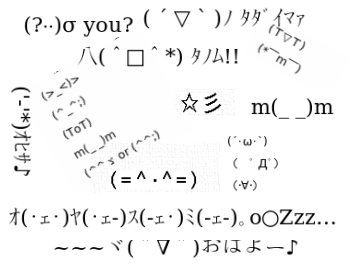
Asian emoticons and Western emoticons are oriented differently. Whereas Western emoticons lie on their side, Asian emoticons are read right side up. In Japan these are known as kao-moji, literally face characters, and millions may be sent everyday with e-mail and mobile phone messages. Because Japanese characters like katakana, hiragana and kanji have two bytes compared to Western character’s one byte, kao-moji has a wider range of expressions than conventional smilies. Because of their popularity most mobile phones come with their own set of pre-installed kao-moji and e-moji, or proprietary pictographs for the exclusive use of one phone company.
If you’re used to Western smilies it will be hard to interpret a kao-moji at first glance. Pay attention to how the eyes look; kao-moji are mainly inspired by expressions from anime and manga. Famous characters like Ultraman and Doraemon even have their own quirky kao-moji! The emoticons go beyond showing emotions - they tell a mini-story of their own. You could express glee over your latest achievement. A few more punctuation marks and letters later, you might say you’re frustrated with how the day has been. It’s a great way of enlivening your messages.
Do you want to express your emotions the Japanese way? Here’s a word of warning: proper kao-moji may be peppered with boxes unless you have Japanese character support. You can look up a list of adapted kao-moji using only for western characters.
[tags]kao-moji, Japanese emoticons, smilies[/tags]
Posted November 28th, 2006 by geisha | Comments Off
Viewing autumn in Japan

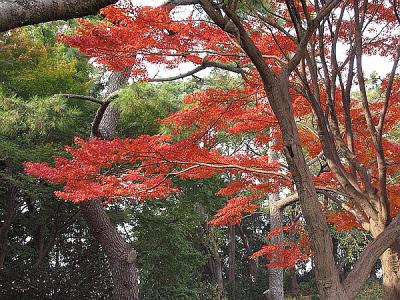
The Japanese love to observe the changes of the seasons. Witness the many events surrounding cherry blossom viewing at the beginning of spring, and the festivals enjoyed under the summer heat. For autumn, there is the momiji-gari, or autumn-leaf viewing. Momiji stands for all of the deciduous trees whose leaves changes color, including maples, gingkos, and the Japanese lacquer tree, and has now traditionally represented fall in Japan. The gari means hunting, and friends and families gather together for a trip to the mountains, where the leaves are brightest. Momiji-gari is still so popular that short travel packages are offered to temples and gardens located in Kyoto and Tokyo that are famous for their trees. Once there, visitors can relax under the trees with their lunch boxes and drinks, write poetry about the season, or simply enjoy the leaves’ beauty against the deep blue skies. It is a quieter, reflective time, different from the rowdiness associated with cherry blossom viewing.
The changing autumn hues last from late September until early December. It often begins in the high reaches of Hokkaido, spreading down to the other regions. The mountains are sprinkled with red and yellow foliage that contrast with the dull green of conifers. The brilliant colors of autumn leaves are to autumn what cherry blossoms are to spring. They represent how fleeting life is, and how everything must change. Spring’s cherry blossoms are short-lived and glorious, while autumn’s falling red leaves are reminders of mortality. The momiji-gari finally ends with the first snowfall and the trees are left bare. That is until the next spring and the cycle begins once again.
[tags]momiji-gari, autumn, japan[/tags]
Posted November 26th, 2006 by geisha | Comments Off
Suga Shikao’s unique sound

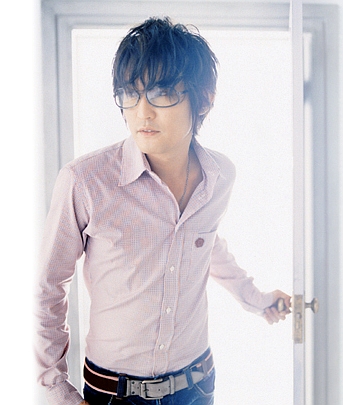
You might not have heard the name Suga Shikao before, but chances are you’ve heard his music. For the past year his work has shown up in movies and anime like Honey and Clover. I first heard Suga Shikao’s unique sound when I finally got to watch Boogiepop Phantom. The opening theme was his song Yuudachi (Night Showers) and had a soft, bluesy feel to it. I promptly forgot about him, but then I heard his songs were used for adaptations of two of my favorite series, xxxHolic and Death Note, so I looked for his singles and listened. And I’m glad I did! Suga Shikao’s sound is a funky and upbeat, yet soothing at the same time.
Being a musician is actually Suga Shikao’s second career. After graduating from a Tokyo university he worked as a salaryman in an ad agency for four years before releasing his debut album Clover in 1997. One might say that his experience in advertising honed his lyric writing. Since then he has released eight other albums and twenty-two singles in his ten year career. His latest album Parade reached the third place in the Oricon weekly charts. Suga Shikao is under Office Augusta, and he’s part of a group of artists named Fukumimi. This group also has Kyoko, Yamazaki Masayoshi, COIL, Hajime Chitose, and Araki Yuko.
Suga Shikao not only sings, he pens most of his lyrics. He’s also used his lyric writing skills for several collaborations, notably with SMAP and KAT-TUN. From the last part of 2005 to April of 2006 he also hosted a Monday night radio show at J-Wave called Night Stories and right now he’s writing a novel.
Suga Shikao’s official website.
Posted November 24th, 2006 by geisha | Comments Off
Lovely dollfies

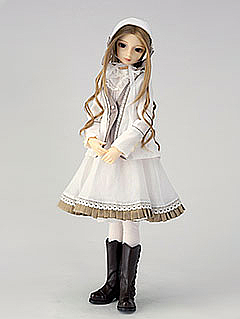
The first time I saw a super dollfie I was amazed that such a life-like creation was just a doll. Super Dollfies are customizable, 58-cm tall ball-jointed dolls made by Volks. These dolls are made out of polyurethane resin, making them very durable. Not only that, the resin gives them a luminous glow that imitates skin much better than porcelain. The Super Dollfie name is applied to dolls of a certain size. Due to their popularity Volks also created similar dollfie lines in different sizes, starting a boom for ball-jointed doll companies mainly in Japan and South Korea.
Have you ever seen Angelic Layer, where Misaki opens the Angel Egg and sees the blank angel? That is exactly what every dollfie looks like straight out of the box. What makes these dolls stand out from all the other dolls is the possibility of making them your own. Not only can you customize a dollfie’s features, hair, and build, they can be posed in many different ways due to their reticulated joints, delighting their owners. Each doll can truly be a unique character with their own distinct personality.
The very first set of Volks dolls were sculpted by a master sculptor at Zoukeimura, Akihiro Enku. They were a set of four dolls with the same head mold but different face paint and wigs. Since then there’s been several batches of character dolls, both male and female. Collecting dollfies is not a cheap hobby. The customizations you need to indulge for that perfect look may cost you a huge chunk of your allowance and savings, but the joy of having your very own doll is enough.
[tags]super dollfies, volks, dolls, bjd, ball-jointed dolls[/tags]
Posted November 22nd, 2006 by geisha | Comments Off
Anticipating Fabula Nova Crystallis

I’ve been off the gaming beat for quite a while, but the news of Square-Enix’s newest Final Fantasy in development made me ecstatic. Even while Final Fantasy XII is being enjoyed by gamers around the world, they have announced and shown previews to their next release, Final Fantasy XIII. Final Fantasy XIII will not only be one game, but a series of games and possibly other media. If that’s the case it’ll be like the Compilation of Final Fantasy VII, which now has four games, two movies, and two novellas further developing the story of the original game. The FF XIII game series will be collectively known as Fabula Nova Crystallis, which translates to The New Tale of the Crystal. Each of these games will be set in a different world with independent characters, with the crystals and myths unifying them as a whole.
There are three games in development. FFXIII and FFXIII Versus are both for the PS3 console, while FFXIII Agito for mobile phones follows the footsteps of Final Fantasy VII~Before Crisis. FF XIII is being developed by the same team who handled FF X, with Motomu Toriyama directing the project. The team that gave us Kingdom Hearts is working on Versus. The release dates for these games have not yet been released, but rumors have it FFXIII will be out by 2008. For those in Japan who want to see a preview of these games, all three games will be featured in the upcoming Jump Festa this December 16th and 17th.
[tags]FFXIII, Fabula Nova Crystallis, Square-Enix, PS3[/tags]
Posted November 20th, 2006 by geisha | Comments Off
The Japanese Bobtail

The Japanese bobtail is a medium-sized, affectionate and active cat, a good housepet for families with children. Their short and silky fur can come in a variety of colors. Some are pure white, black, or blue, but they can come in a mix of colors as well. Bobtails with calico fur (called mi-ke or tri-color in Japan) are often featured as the maneki-neko, the beckoning cat, in front of stores.
Japanese bobtails have litters of around three to four kittens. They are usually short-haired cats, but occasionally a long-haired kitten is born in the litter. Sleek and elegant, at rest, they go stir-crazy without attention. Anyone who wants to own a Japanese bobtail should be ready to play games, and they can be taught to fetch and pounce. Or spend some time talking to them and hearing them reply in their soft voices.
There’s a legend about how the Japanese bobtail got it’s stubby tail. In olden times Japanese bobtails had long tails, just like any other cat. One cat was sleeping too close to the hearth and set its tail on fire. It ran through the the streets of the Imperial city, setting the houses on fire and destroying the city. In anger, the emperor decreed that all the cats must have their tails cut short, so that it may never happen again. Actually, every bobtail’s tail is unique. Each kink, curve and bend are different from cat to cat. Because of the longer tail fur they look like little pompoms attached to the end of the cat.
Posted November 18th, 2006 by geisha | Comments Off
Colorful Kokeshi Dolls

Kokeshi dolls are famous in the Tohoku region where they are still made to a large degree. These brightly-painted dolls are popular with tourists leaving the hot springs, and most Japanese girls have at least one in their collection. They first appeared in the middle of the Edo period, and there are many theories on where they came from. Some say they are derived from the toys children played with. Another story says that the wood craftsmen searching for good wood to lathe settled in the region came up with the dolls as souvenirs. Whatever their origins are, these dolls are beautiful in their simplicity. Kokeshi dolls are almost always female, though male ones are now becoming more common.
The traditional kokeshi called dento are dolls with long, slim bodies without limbs, and thicker, rounded heads. The hair, face and clothes are drawn on with simple lines and the length of the body is decorated with floral patterns or bands of bright colors. Because they are made by hand, no two dolls are alike. Some dolls are whimsical and smiling, while others are serious and contemplative. These kokeshi may come in different sizes, designs or proportions, all of which depends on the style predominant in the area it came from. There are currently eleven different styles of dento kokeshi. Shingata, or creative kokeshi, is a more modern doll style that allows the artist freedom to shape the doll as he wishes. These dolls are also limbless, but they are also more shapely, cute and animated. They look like happy children eager to go to the festival. Because they come in so many different looks, it’s easy to see why some people go crazy collecting them.
[tags]kokeshi, dolls, japan[/tags]
Posted November 16th, 2006 by geisha | Comments Off
Of Japanese School Uniforms and Fashion

A girl in uniform. Note that this is what would a prescribed uniform would be like.
A typical Japanese schoolgirl in anime would have a short skirt, blouse with what is called the sailor collar (think Sailor Moon!) and long loose socks. The sailor collar is pretty much part of the prescribed school uniform. However, the short skirt and the really long and loose socks — those are another story.
Schools in Japan have been prescribing the military looking uniforms for boys and girls. As mentioned above, girls wear something that has a sailor collar and is known as the sailor fuku. Boys on the other hand wear military style uniform with high collars and they are called gakuran. This has been the prescribed uniform since the Meiji era. There is a new trend though, and that is the adoption of the more Western style of uniforms which would typically have the white dress shirt, necktie, blazer with the crest of the school. In the more Western style of uniforms, girls wear a tartan skirt and boys would have trousers which are not necessarily of the same color as the blazer.
If you see girls in short skirts, they do not necessarily wear it that way while inside the school premises. They might tuck it in by some magical way or skill so that it will appear to be short but while in the school premises, they have to make sure they adhere to the regulations. Hence the need to untuck the skirt somehow. The same thing goes for the socks. Loose socks are not prescribed but students insist on wearing them anyway.
This kind of fashion is popular among otaku outside Japan. There is the idea that it is cute and they even tailor their customized uniforms. The hip way that the students wear their uniforms is probably part of the way Japanese street fashion is and as such, one could surmise that it is why some of the young people all over the world are imitating this, especially those exposed to anime and games.
[tags]japan,uniform[/tags]
Posted November 14th, 2006 by geisha | Comments Off
Anime and manga as portrayed on TV
There are various shows on TV and in Japan there is what they call J-drama. These J-drama would have their famous stars or upcoming pop idols portraying the characters from the popular anime and manga. The topics are not limited to almost real life situations. There are some fantasty-filled manga and anime that have been turned into some live action series. One of them is Sailor Moon. You might wonder how it is possible but it has been done! Think of all the otaku who enjoy cosplay a lot. It would seem as though their fantasies have become real through such shows.
There are really interesting J-drama series which are based on manga. Some of them would be “Kimi wa Petto,” “Hana Yori Dango” and “Gokusen.” “Kimi wa Petto” is about a career woman taking care of a young man as she would take care of a pet dog. There are interesting twists in that series but it is also a good study of the human condition: of wanting to love and be loved. “Hana Yori Dango” has been popular as both anime and manga. It is the story of young people. A young woman named Tsukushi comes across a group of young men known on campus as F4. She develops a relationship with the leader of the group, Domyouji. “Gokusen” is about a high school teacher who happens to hail from a Yakuza clan. She dreams of having all of her students graduate. These three examples of anime have a hi-jinx factor as some people say and the situations are quite comical. Not quite in the sitcom kind of way though. These three J-drama actually have Matsumoto Jun in common. He’s a popular member of the Johnny’s group “Arashi.”
There are also Chinese shows that have adapted some manga and anime. Some of them would be the high school basketball series “MVP Valentine” which is based on “Slam Dunk” and it starred the group 5566. Taiwanese group F4 and Barbie Hsu starred in the series “Meteor Garden” which is based on “Hana Yori Dango.” Another manga turned into a Taiwanese TV series is “Yamada Taro Monogatari.” The Taiwanese actor Vic Zhou played the lead role. His fellow F4 member Ken Chu was also in the series, acting as the father to Vic’s character. As you can see, this trend is not only in Japan!
The difference between the TV series and J-drama adaptations and the anime and manga would be that sometimes the element of the fantastic and whatever other effects which are typical of the shoujo and shounen manga look weird. Computer generated graphics don’t always make such great effects. Either way, these shows are very enjoyable and entertaining. Plus you get to see your favorite actors too!
[tags]japan,taiwan,j-drama,anime,manga[/tags]
Posted November 12th, 2006 by geisha | Comments Off